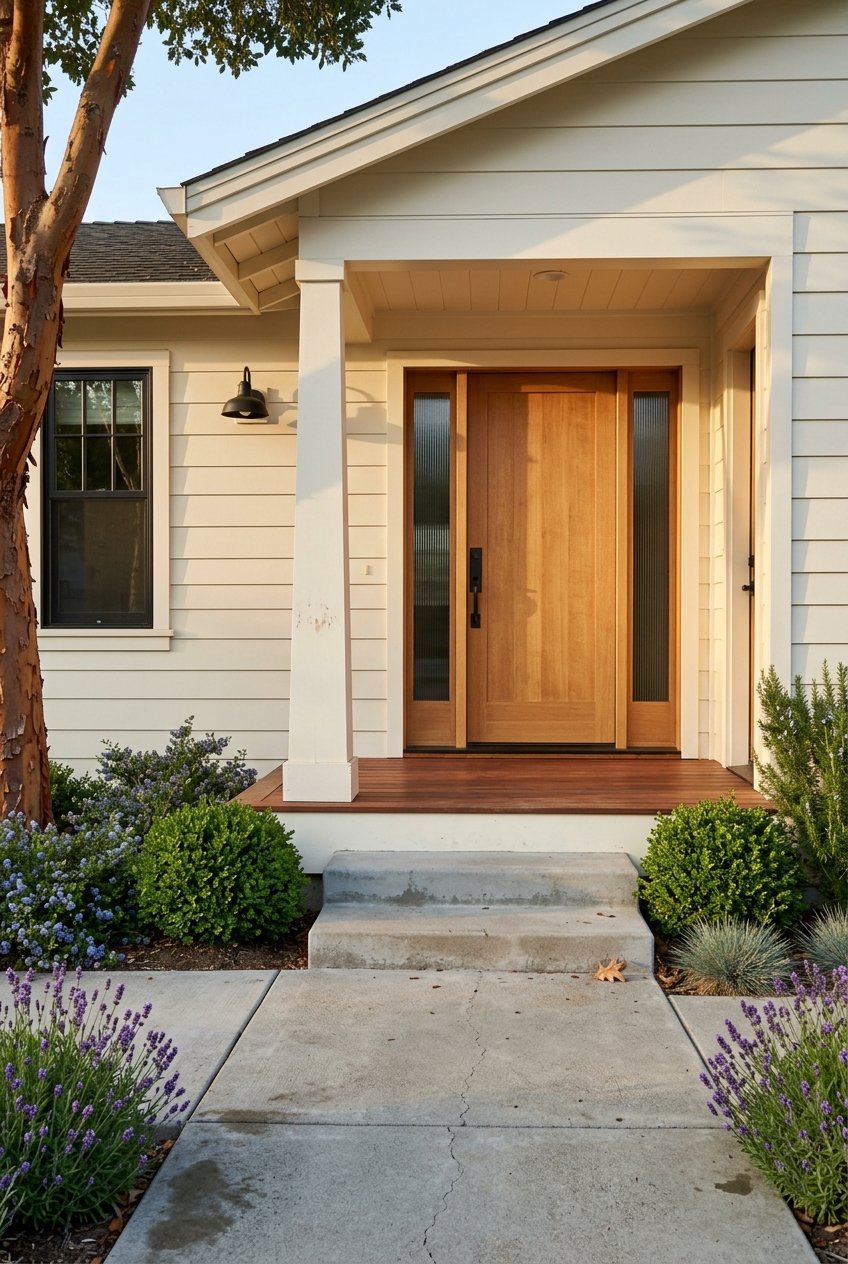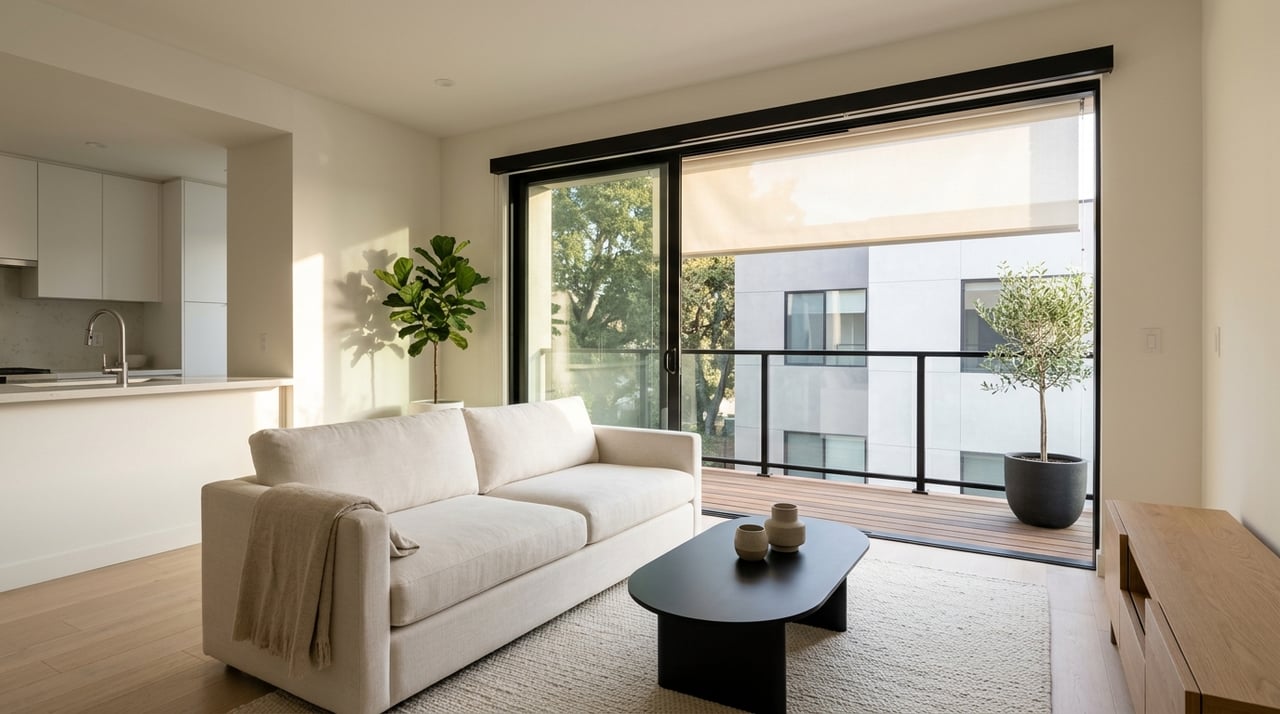
Tuesday and Saturday mornings, the farmers market at El Cerrito Plaza still runs 9 to 1, same as it has for years, tables of stone fruit and cut flowers set up within sight of a chain-link fence that wasn't there a year ago. Walk or bike the Ohlone Greenway past the BART station and you'll pass the corner of Richmond Street and Central Avenue, where crews have been pouring foundations. The number attached to this site, the one that shows up in every press release, is 743. That's the eventual apartment count across the whole build-out. What's actually rising on the ground this year is one building, with 70 units in it.
That gap between the headline number and the thing you can currently point to matters if you live near the Plaza, because it tells you what to expect and when. The 743 is real, but it's a 2029 number. What changes in your daily errands between now and then is a much narrower, more immediate story.
The Building That's Actually Rising
The structure going up at 515 Richmond Street, on the parcel where Richmond, Central Avenue, and the Ohlone Greenway meet, is a six-story building designed by the architecture firm Pyatok. It's a joint venture of three groups: Holliday Development, Related California, and Satellite Affordable Housing Associates. It includes about 59,800 square feet of housing and 5,300 square feet of amenity space, plus 12,400 square feet of ground-floor garage space.
The unit mix inside is 30 one-bedrooms, 20 two-bedrooms, and 20 three-bedrooms, for 70 homes total, restricted to households earning 30 to 60 percent of the Contra Costa Area Median Income. Parking is scaled to match: 35 car spaces and 106 bike spaces, a ratio that tells you this building was designed around the BART platform a few hundred feet away, not around car ownership.
Construction on this first phase officially started in November 2025, and the current timeline points to completion in late 2027, about two years after that start date. The financing behind it is worth naming because it explains why the units are priced the way they are: $39.1 million came from the California Strategic Growth Council's Affordable Housing and Sustainable Communities program, and an earlier $2.4 million loan from the Bay Area Housing Finance Authority helped the project qualify for that larger award in the first place. This is subsidized housing built to income limits, not a market-rate building with a few affordable units mixed in.
Where the Other 673 Homes Come From, and When
The 70 units under construction now are the first of six planned buildings. Here's how the rest of the 743 breaks down by developer and phase.
| Phase | Developer | Units | Type |
|---|---|---|---|
| Phase 1 (under construction) | Related California | 70 | Affordable, 30-60% AMI |
| Two additional phases | Related California | 163 more | Affordable, up to 60% AMI |
| Two phases | Holliday Development | 392 | Market-rate |
| One joint phase | Related California + Holliday Development | 118 | "Missing middle" |
Add it up and Related California's affordable phases total 233 units, Holliday's market-rate phases total 392, and the shared final phase contributes 118, landing at 743. All six buildings are anticipated to be complete by 2029.
That 2029 date is the number residents near the Plaza should actually hold onto, more than the 743. It's the year the site stops being an active construction zone and starts being a finished neighborhood addition. Everything between now and then is one building at a time.
The Plaza You'll Get Isn't the Plaza You Have
Part of what makes 743 feel like an abstraction is that most of what people picture when they hear "transit village" doesn't exist yet, even on paper as a finished design. The full master plan calls for a 22,000 square foot public plaza running from Liberty Street along Fairmount Avenue to the BART station, plus up to 2,100 square feet of ground-floor commercial space and a new BART parking garage with 145 spaces for riders. There's also a potential 20,000 square foot public library included in the plan, though it remains a possibility tied to future phases rather than a committed piece of the project.
Once all six buildings are standing, future residents are expected to have access to around 260 dedicated vehicle parking spaces and roughly 1,100 secure bike parking spaces across the site, including spots sized for cargo bikes. None of that infrastructure arrives with the first building. The 145-space BART garage, the plaza, the possible library: those are end-state features tied to phases that haven't broken ground.
What Changes This Year, Not in 2029
If the eventual plaza and library are years away, what actually shifts for someone who shops, walks, or commutes through El Cerrito Plaza in the meantime is narrower and more concrete:
- The farmers market keeps its Tuesday and Saturday, 9 a.m. to 1 p.m. schedule at the Plaza, run by the El Cerrito Chamber of Commerce, unaffected by the construction footprint so far.
- The Ohlone Greenway, which runs the length of El Cerrito with 2.7 miles of trail and 24 acres of habitat including a restored wetland and frog habitat, passes directly alongside the active build site at Richmond and Central. Walkers and cyclists on that stretch are sharing the path with construction traffic for the next several years, not just this one.
- The retail cluster that anchors the Plaza, Trader Joe's, Target, Ross Dress for Less, and Barnes & Noble among them, sits on the opposite side of the surface lots from the construction parcel and continues operating as before.
- Rialto Cinemas Cerrito, the neighborhood theater on San Pablo Avenue, remains part of the everyday rotation of errands and evenings around the Plaza, separate from the BART parcel entirely.
- Surface parking that BART previously used for commuter cars is being converted acre by acre into building footprints, a shift that will likely keep reshaping where people park near the station as later phases start.
That last point is the one easiest to miss if you only read the press releases. The 743-home master plan was adopted as a community vision back in 2021, and it's taken years of environmental review, funding rounds, and developer selection to get one building to a foundation. The pace from here, one phase moving to construction every year or two rather than all six at once, means the fenced-off corner near the Greenway is going to be a fixture of the walk to BART for a while yet.
None of this is a reason to avoid the Plaza or wait for anything to finish. It's simply useful to know that the number worth watching isn't 743, it's which of the six phases has broken ground, because that's the one number that tells you what your actual commute, market run, or Greenway walk looks like this year.
If you're weighing a move near El Cerrito Plaza, or you already live nearby and want a second set of eyes on how a project like this might affect timing or value down the line, Myron Potter has been tracking East Bay neighborhoods like this one closely and is happy to talk through what it means for your specific situation. Book an appointment whenever it's useful.