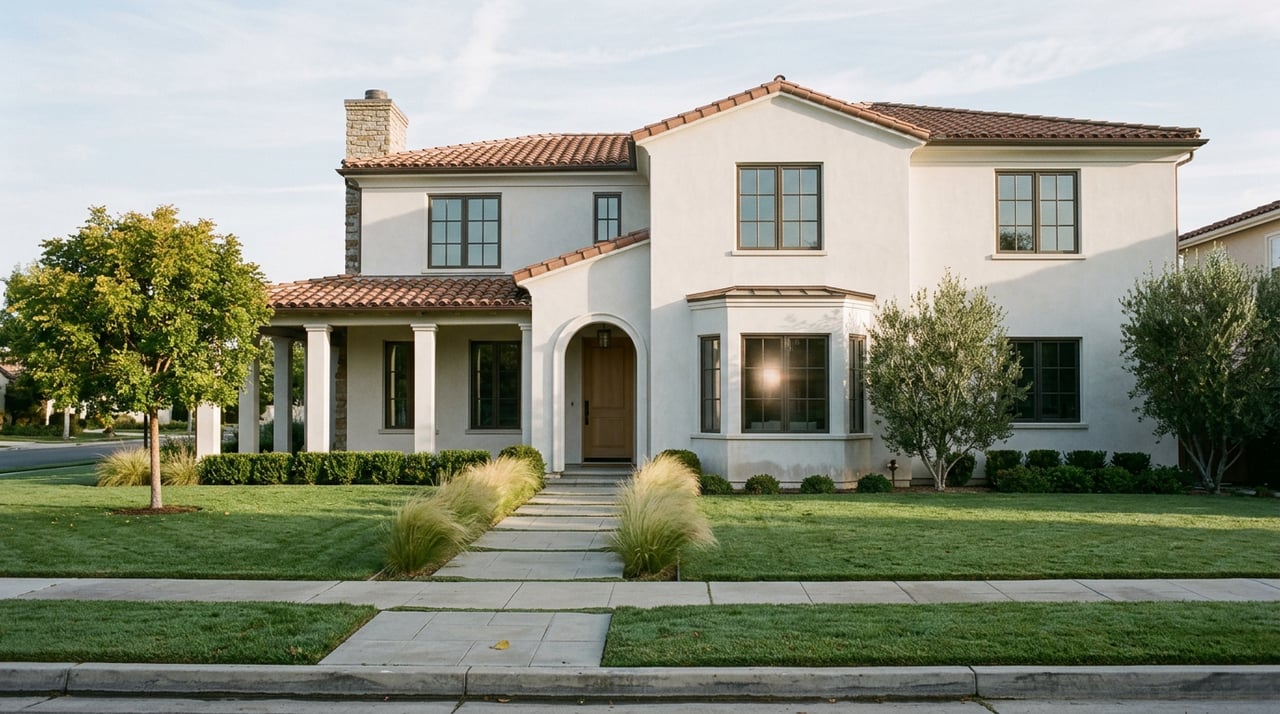
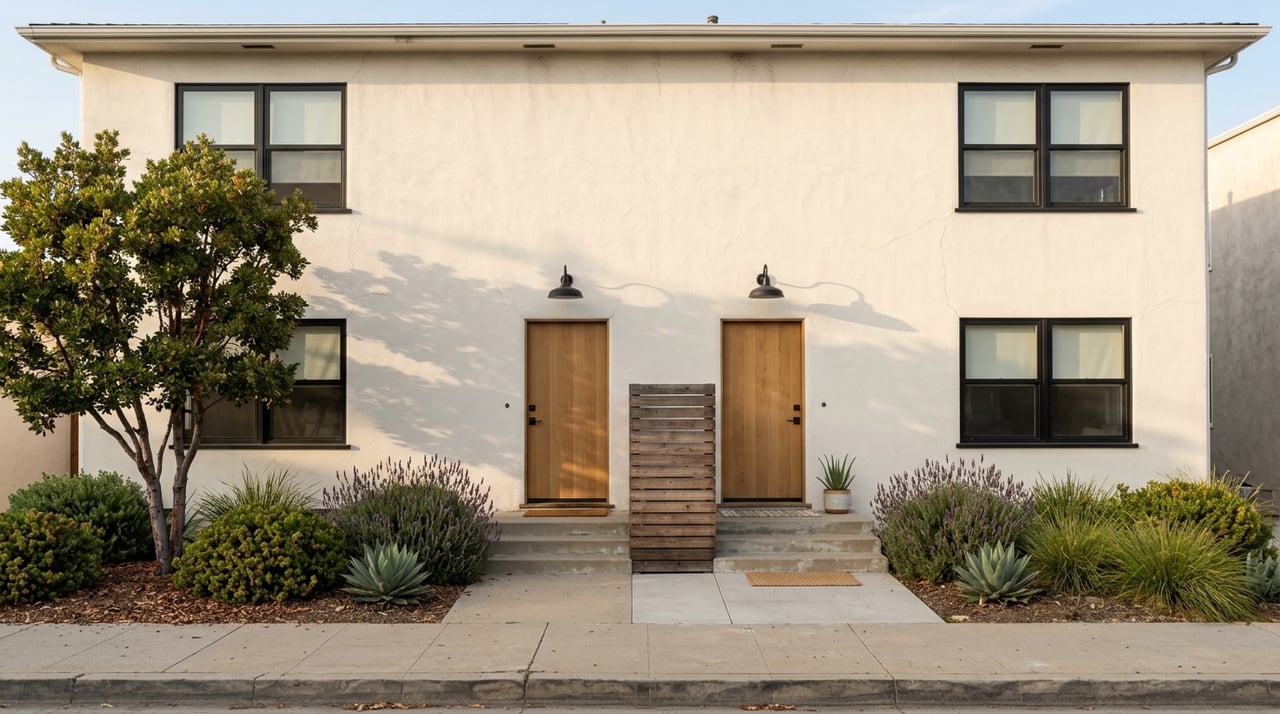
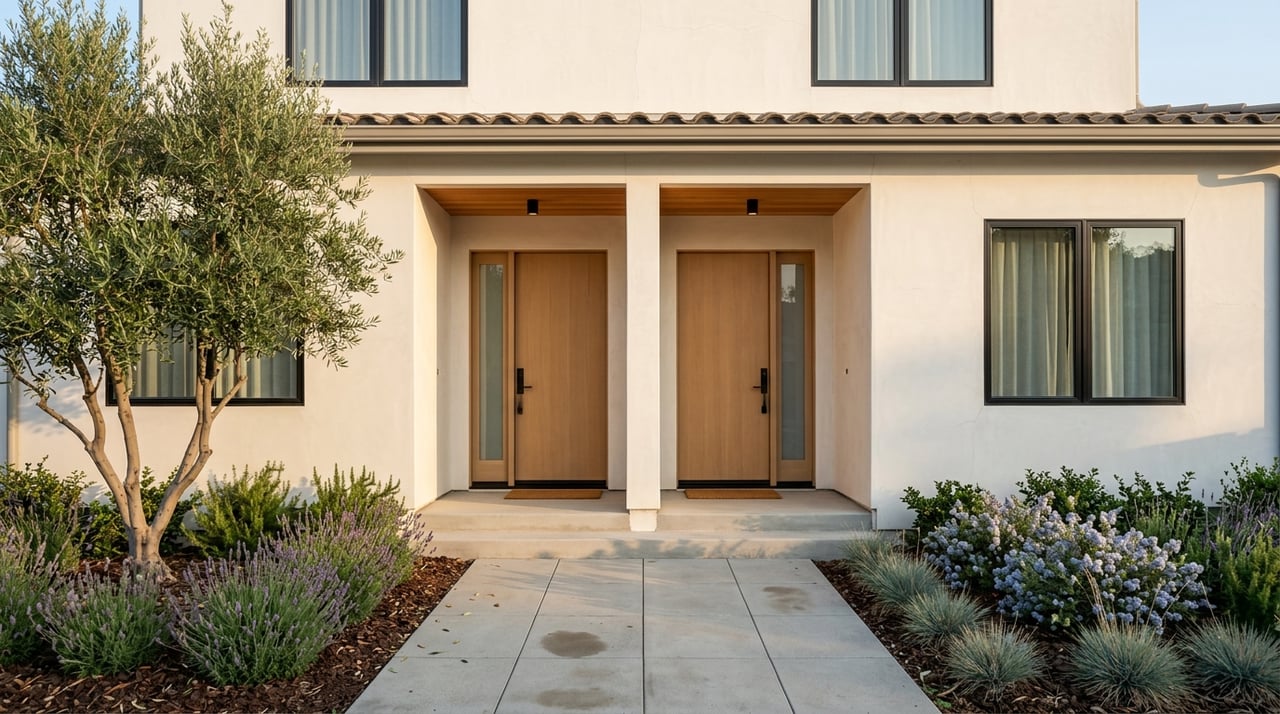
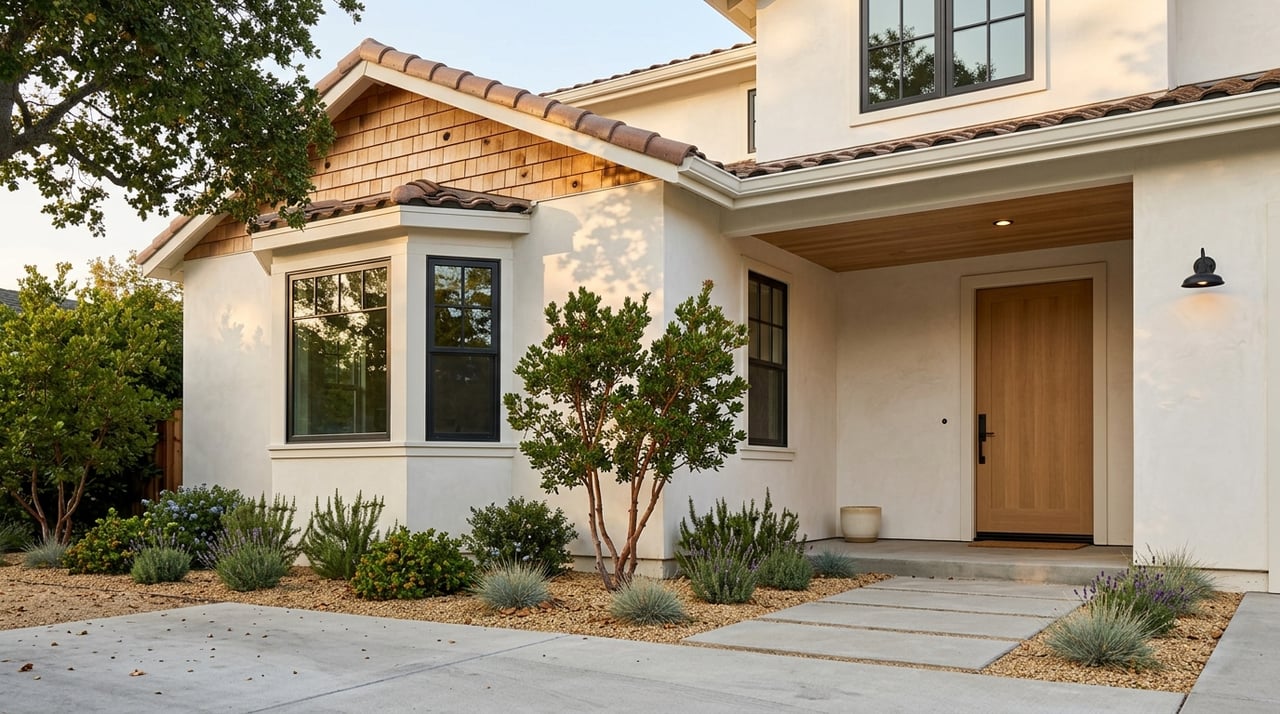
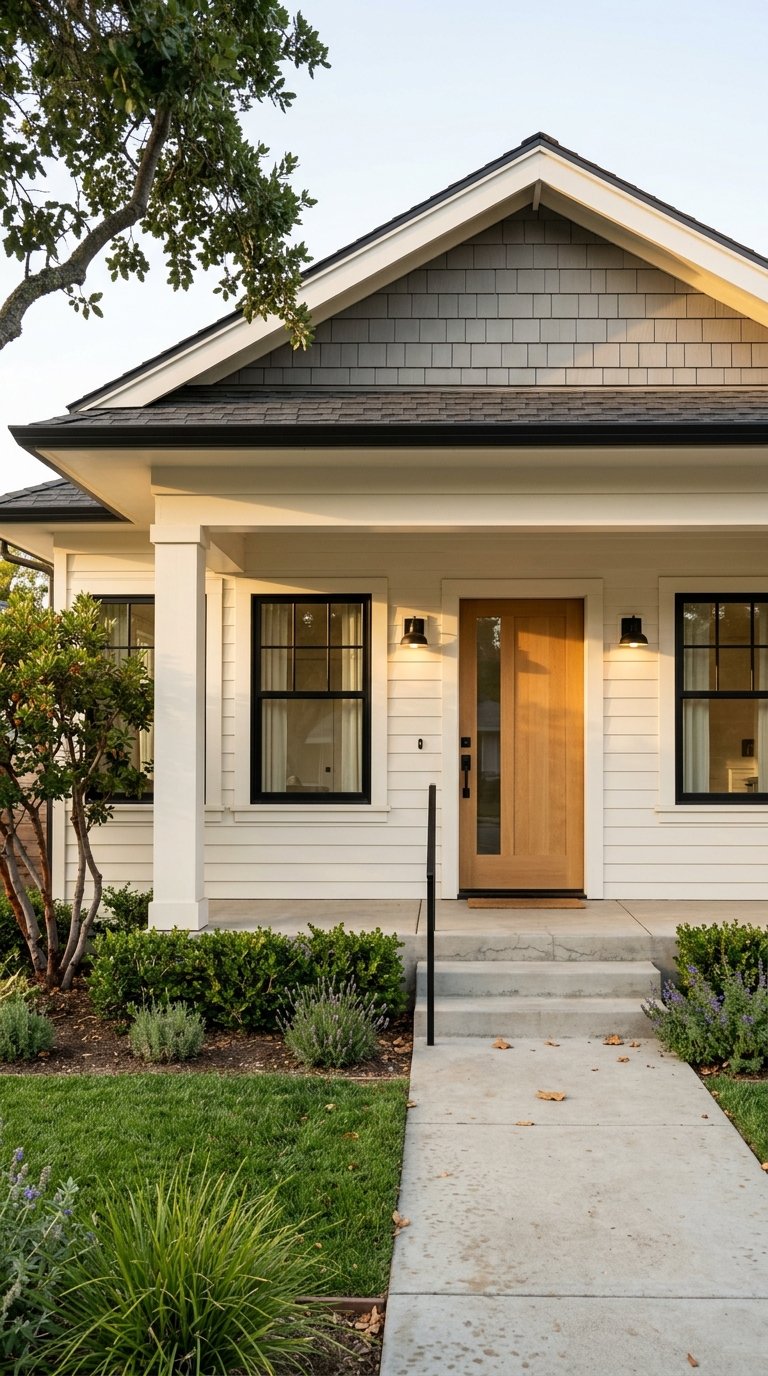
This fall I have a listing on each side of the Caldecott Tunnel, one in Richmond and one in Walnut Creek, and some weeks it honestly feels like I'm working in two different markets, because they are! The September numbers back that up.
West of the tunnel, homes are still drawing multiple offers. East of it, buyers finally have room to breathe. Same month, same mortgage rates, two very different experiences.
Here's what happened, city by city, and what it means if you're thinking about buying or selling in the East Bay this fall.
The short version
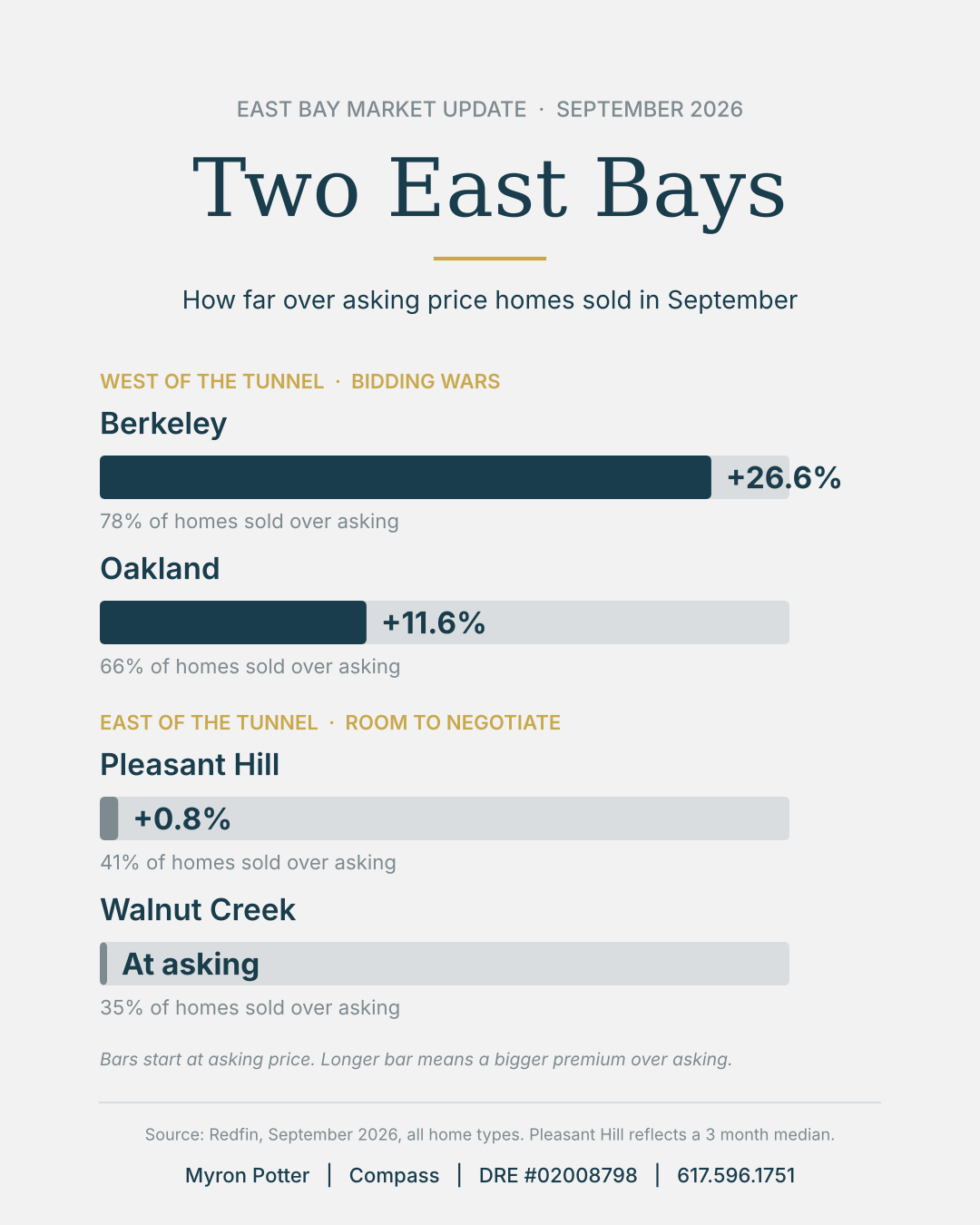
- Berkeley: homes sold for about 27% over asking, and nearly 8 in 10 sold above list.
- Oakland: about 12% over asking, and homes sold 8 days faster than last year.
- Lamorinda: inventory is tight, but only about 4 in 10 homes sold above list.
- Pleasant Hill: right around asking, with more homes selling than a year ago.
- Walnut Creek: right at list price, and homes took about a week longer to sell.
West of the tunnel: Berkeley and Oakland are still competitive
Berkeley remains one of the most competitive markets in the Bay Area. The median sale price in September was about $1.41M, roughly flat from a year ago, but the typical home sold for about 27% over its asking price. Nearly 78% of homes sold above list, and the median home went under contract in about 15 days.
That gap between list price and sale price is the story. In Berkeley, list prices are often set as a starting point, and buyers who want to win should expect to compete.
Oakland is a step calmer but still firmly a seller's market. The median sale price was about $773K, up 3% from last year. Homes sold for about 12% over asking on average, two thirds sold above list, and the median time on market dropped to 21 days from 29 a year ago.
Lamorinda: tight inventory, calmer bidding
Lafayette, Moraga and Orinda sit right at the tunnel, and they don't fit neatly on either side. Active single family listings were down 29% from a year ago, and supply is only about 1.6 months, which is tight. Homes are also selling faster, in about 26 days compared with 33 last year.
But the bidding isn't Berkeley style. About 41% of single family homes sold above list, and the median price of about $1.85M was down a little over 2% from last year. In other words, well priced homes move quickly, and buyers still have room to negotiate on the rest.
East of the tunnel: Walnut Creek and Pleasant Hill give buyers room
Pleasant Hill is where I live, so I watch it closely. On average, homes sold right around asking, and only about 41% sold above list. The median price over the last three months was about $906K, roughly 5% lower than a year ago. At the same time, more homes changed hands: 91 sales in September, up from 75 a year earlier. More activity, fewer bidding wars.
Walnut Creek was the calmest market of the group. Homes sold right at list price on average, about 35% sold above list, and the median time on market stretched to 33 days from 26 last year. The median sale price was about $848K, down 2% from last year.
One more wrinkle in Central Contra Costa: single family homes still sold in about two weeks, while condos and townhomes took about a month. If you're shopping for a condo or townhome, that's where the most negotiating room is right now.
What about mortgage rates?
The 30 year fixed rate climbed from 6.71% in early September to 7.40% by mid October, according to Freddie Mac. That's a real jump, and it shows up in monthly payments. But homes kept selling on both sides of the tunnel. Rates changed how much people could spend, not whether they were buying.
What it means if you own a home
- East of the tunnel: pricing right from day one matters more than it did in the spring. Buyers are comparing carefully, and an overpriced listing can sit.
- West of the tunnel: demand is strong, and good preparation still pays off. A clean, well presented home in Berkeley or Oakland can still draw a crowd.
- Lamorinda: low inventory works in your favor, but buyers are disciplined on price. Speed comes from pricing well, not from bidding wars.
What it means if you're buying
- Central County and Lamorinda: you can take your time, get full inspections, and ask for credits or repairs.
- Berkeley and Oakland: go in with your financing ready and a clear plan for competition.
- Condos and townhomes in Central County: the longest days on market, and the most room to negotiate.
My take
If I were buying right now, I'd look hard at Central County and Lamorinda, take my time with inspections, and ask for credits. If I owned in Oakland or Berkeley and was thinking about a move, I'd start preparing now so the house is ready when spring buyers show up.
Every street is its own market, though. If you're curious what your home is worth in this two speed market, call or text me at 617.596.1751 or email [email protected], and I'll send you a current number for your place.
Data: Redfin, September 2026, all home types, for Berkeley, Oakland, Pleasant Hill and Walnut Creek; Pleasant Hill median price is a three month figure. Lamorinda: Compass October 2026 Lamorinda Market Outlook, single family homes. Central Contra Costa days on market from a September local market report. Mortgage rates: Freddie Mac Primary Mortgage Market Survey.
Myron Potter, Compass | DRE 02008798